Advancing LLMs to support evidence management and decision-making in clinics
The Human-Centered Health AI group evaluates, develops and implements large language and multi-modal models for clinical applications. We currently have collaborations in the area of precision oncology, stroke, and vaccination.
** ONCO-TP: EvidenceDB and Variantscape **:
The extent to which a specific molecular alteration (broadly defined, including genomic variants, fusion gene or RNA products and copy number variations), or set of alterations, is therapeutically relevant (‘targetable’ or ‘actionable’), is specified in international guidelines based on different degrees of evidence, known as ‘evidence tiers’. These recommendations are based on biological rationale (e.g. if the treatment targets the pathway affected by the alteration) as well as preclinical and, preferably, clinical data. However, the majority of variations lack high-quality evidence, leaving clinicians uncertain about how to interpret an observed alteration in a given patient. Consequently, they must perform comprehensive research across diverse available evidence sources to inform treatment decisions, including the interpretation of the extent to which certain molecular variants are pathogenic or ‘druggable’ in the respective context. For maximally effective MTB decision-making, it is essential that each participant is able to access comprehensive and reliable information.
In collaboration with clinical researchers at the HOCH-Health Ostschweiz Kantonsspital St. Gallen and the Luzerner Kantonspital, we have developed a method to mine the published literature for variant-disease-treatment associations and provide those in a searchable database. Check our database online at EvidenceDB.
** Implementation and Human Factors **:
Our group is interested in the human experience of clinicians when interacting with AI and other digital tools, and use qualitative methods to surface hidden frustrations and gaps which help explain adoption patterns, shadow tool usage behaviours, and successful clinical implementation. Our research emphasises that to be maximally effective for the benefit of both patients and clinicians themselves, clinical AI should be optimised to support clinicians as humans.
related publications
2024
Preventing harm from non-conscious bias in medical generative AI
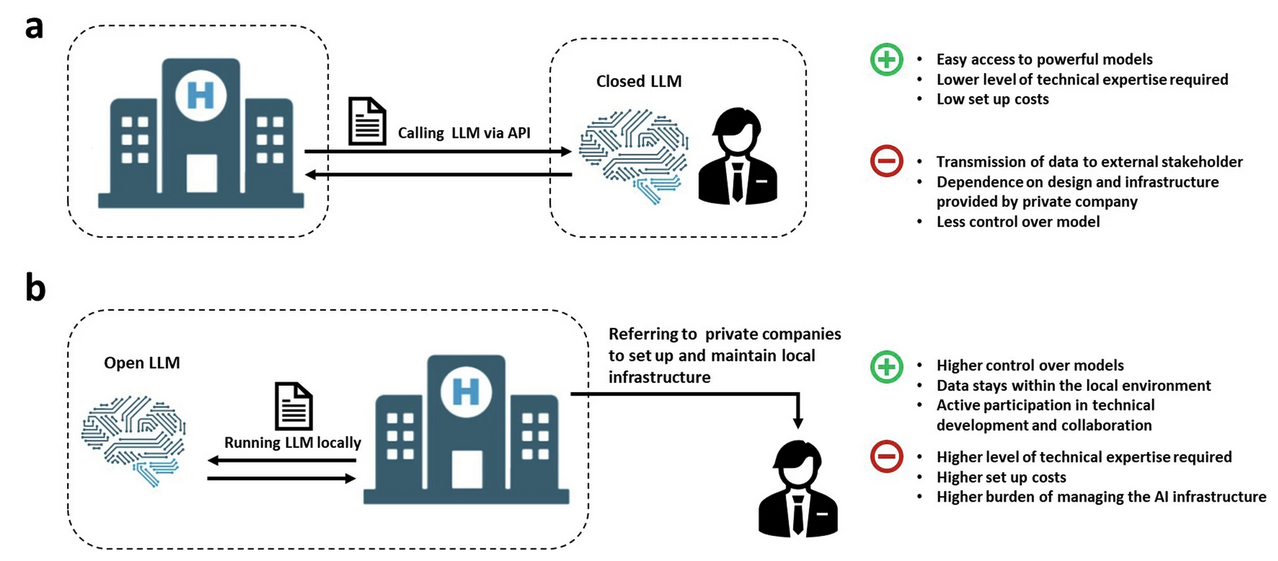
Integrating Large Language Models (LLMs) into healthcare promises substantial advancements but requires careful consideration of technical, ethical, and regulatory challenges. Closed LLMs of private companies offer ease of deployment but pose risks related to data privacy and vendor dependence. Open LLMs deployed on local hardware enable greater model customization but demand resources and technical expertise. Balancing these approaches, with collaboration among clinicians, researchers, and companies is crucial to ensure effective, secure, and ethical implementation.
2024
The Paradoxes of Digital Tools in Hospitals: Qualitative Interview Study
Marie Wosny, Livia Maria Strasser, and Janna Hastings
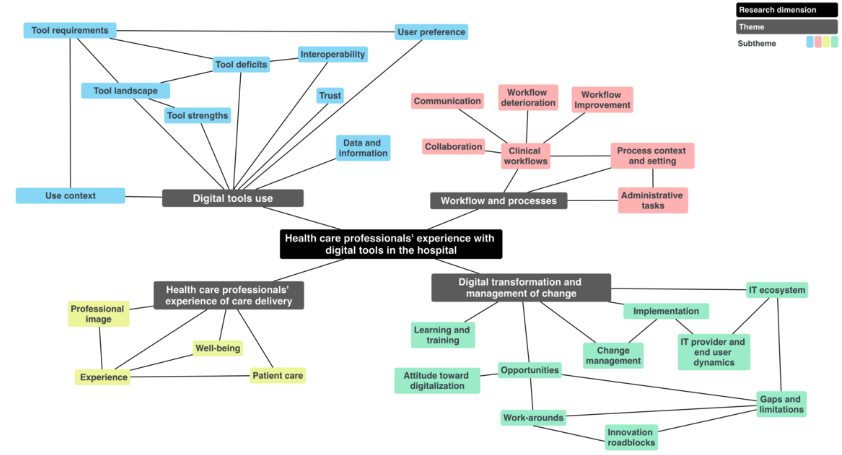
Background: Digital tools are progressively reshaping the daily work of health care professionals (HCPs) in hospitals. While this transformation holds substantial promise, it leads to frustrating experiences, raising concerns about negative impacts on clinicians’ well-being. Objective: The goal of this study was to comprehensively explore the lived experiences of HCPs navigating digital tools throughout their daily routines. Methods: Qualitative in-depth interviews with 52 HCPs representing 24 medical specialties across 14 hospitals in Switzerland were performed. Results: Inductive thematic analysis revealed 4 main themes: digital tool use, workflow and processes, HCPs’ experience of care delivery, and digital transformation and management of change. Within these themes, 6 intriguing paradoxes emerged, and we hypothesized that these paradoxes might partly explain the persistence of the challenges facing hospital digitalization: the promise of efficiency and the reality of inefficiency, the shift from face to face to interface, juggling frustration and dedication, the illusion of information access and trust, the complexity and intersection of workflows and care paths, and the opportunities and challenges of shadow IT. Conclusions: Our study highlights the central importance of acknowledging and considering the experiences of HCPs to support the transformation of health care technology and to avoid or mitigate any potential negative experiences that might arise from digitalization. The viewpoints of HCPs add relevant insights into long-standing informatics problems in health care and may suggest new strategies to follow when tackling future challenges.